Meridia Web
Independent Hotel Websites: 17 Elements That Influence Bookings and Revenue
A structural checklist for deciding whether a website supports a direct enquiry journey.
A website is not a catalogue
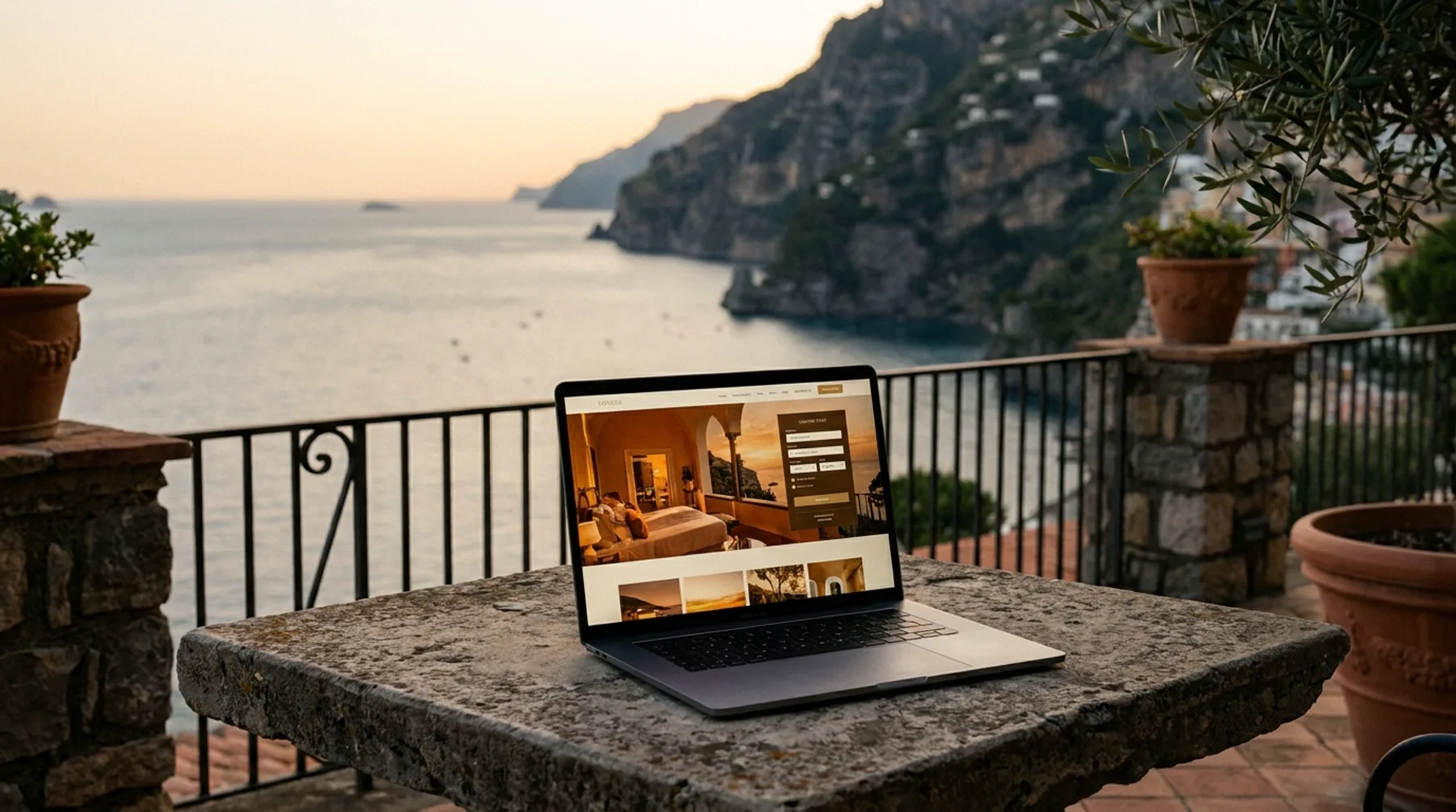
An independent hotel does not compete on appearance alone. The site must help someone understand the place, reason to choose, expected experience, availability path and response route.
Design matters when it reduces uncertainty and supports price. Motion, photography and words without a clear journey become decoration.
Intent and architecture
People arrive with different intentions: room, location, experience, service, group, event or platform comparison. Each intent deserves a recognisable page or content block.
A readable architecture connects home, rooms, place, services, contact, booking, policies and languages without placing everything in one long page.
The first five elements
1. Specific proposition. 2. Real authorised photography. 3. Understandable location. 4. Readable room types. 5. One coherent primary action.
These elements should appear before the visitor needs external proof. They require facts, hierarchy and a clear invitation, not absolute promises.
Elements six to nine
6. Availability or a link to the official system. 7. Essential policies. 8. Direct contact. 9. Answers to recurring questions.
The website must not invent availability. It integrates an existing booking engine or gathers a structured enquiry and states response expectations.
Elements ten to thirteen
10. Guest language. 11. Mobile performance. 12. Accessibility. 13. Legal trust and seller identity.
Localisation includes URLs, metadata, canonical, hreflang, forms, errors, email and operating information, not only navigation labels.
The final four
14. Technical SEO. 15. Consistent structured data. 16. Conversion measurement. 17. Maintenance and ownership.
A sitemap does not compensate for empty pages. Schema must match visible content. Measurement should distinguish clicks, started forms, completed enquiries and qualified opportunities.
The 17 elements in four blocks
| Block | Elements | Key question |
|---|---|---|
| Foundations (1 to 5) | Proposition, real photography, location, rooms, primary action | Is it clear where you are and why to choose you? |
| Conversion (6 to 9) | Availability, policies, contact, recurring questions | Can the guest decide without leaving the site? |
| Trust (10 to 13) | Language, mobile, accessibility, seller identity | Does the site stand comparison with the platforms? |
| Technical (14 to 17) | Technical SEO, structured data, measurement, maintenance | Who maintains all this in six months? |
How to read this data
The key question tells whether the block truly supports direct demand.
The home page
The home page should quickly answer: what experience is this, who is it for and what should the visitor do? It should not contain every detail or ten CTAs with similar intent.
A good home page distributes demand to focused pages and preserves one primary action for the main journey.
Rooms and visual proof
Each type needs real images, capacity, characteristics and verifiable conditions. Images need reserved dimensions to prevent layout shifts and useful alternative text.
Galleries should not hide critical information behind fragile interactions. On mobile, content must work without hover or animation.
Languages and tourism
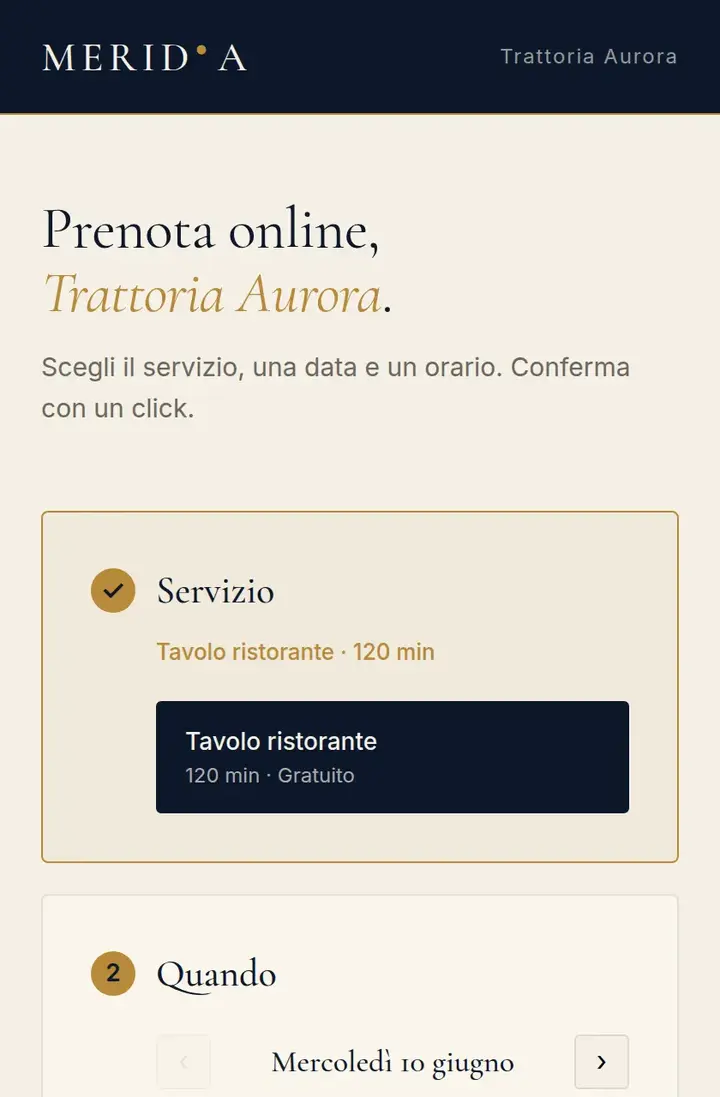
Eurostat confirms the structural scale of European tourism. Italian and English are a reasonable core for an internationally exposed property only if both versions remain maintained.
Google recommends separate URLs and reciprocal hreflang. Aggressive IP redirection can prevent user choice and complicate crawling.
Performance and accessibility
Technical targets are LCP below 2.5 seconds, INP below 200 milliseconds and CLS below 0.1. They are targets rather than universal guarantees and require field measurement.
Keyboard access, focus, contrast, labels, errors and reduced motion improve quality and reduce reconstruction risk.
Core Web Vitals technical targets
| Metric | Target | What it measures |
|---|---|---|
| LCP | < 2.5 s | How long the main content takes to appear |
| INP | < 200 ms | How long the page takes to react to interaction |
| CLS | < 0.1 | How much the layout shifts while loading |
How to read this data
These are targets to measure on real devices, not universal promises.
Measure without surveillance
A minimised event set can cover language change, availability click, form start and completion, contact and source. Advertising scripts should not load before consent where required.
The useful result is not total visits. It is learning which pages and intents contribute to valid enquiries.
Recommendation
Assess all 17 elements as one system. Fix blockers, trust and conversion first, followed by content, authority and experiments. A redesign that changes URLs without migration can destroy existing value.
Meridia Web preserves client domain and data, documents redirects and rollback, and connects the website to approved operating flows.
Official sources and notes
Sources were verified on the stated date. Scenarios and formulas remain explicitly disclosed.
- Eurostat, Tourism statistics2026-07-11
- Google Search Central, Localized versions2026-07-11
- Google Search Central, Helpful content2026-07-11